

What Counts as Carrying a Concealed Weapon in Michigan?
Michigan’s concealed-carry law, MCL 750.227, makes it a crime to carry a concealed pistol without a valid license, known as a CPL.
The same statute treats certain other concealed weapons, such as daggers and stilettos, differently. Those weapons cannot be licensed at all, so carrying one concealed is a crime regardless of any permit.
That distinction matters. A pistol becomes lawful to carry concealed once you hold a valid CPL, but a dagger or stiletto does not have a licensed version. Our CCW charges page walks through how the law defines each category.
Why Is Carrying Without a CPL a Felony?
Carrying a concealed weapon without a license is a felony punishable by up to five years in prison and a fine of up to $2,500. It is charged under MCL 750.227, and the felony grade is what makes these cases so serious.
Because it is a felony, a conviction is scored under the state’s sentencing guidelines rather than sentenced at a judge’s free discretion, and how Michigan sentencing guidelines actually work explains what that number means and what can move it.
A conviction does more than impose a sentence. It creates a permanent felony record that can affect employment, housing, and your future firearm rights long after any prison term or fine is behind you.
That is why treating a CCW charge like a minor infraction is a mistake. See our weapons charges page for the broader picture of how these convictions follow a person forward.
What About Carrying a Pistol in a Vehicle?
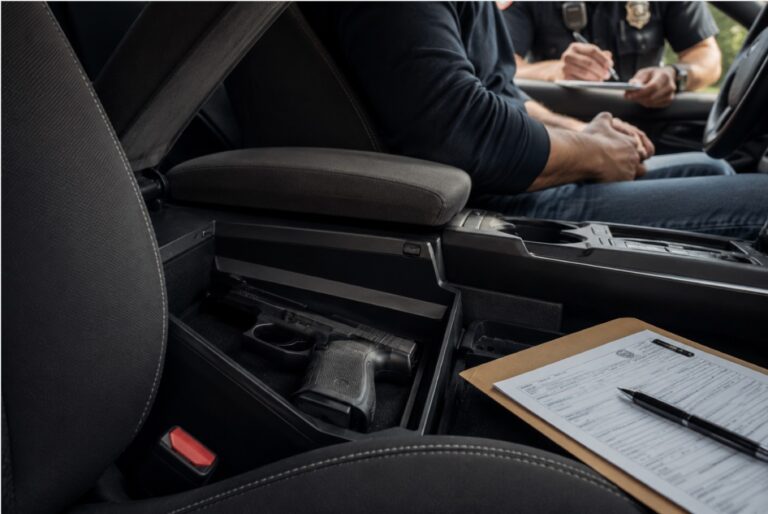
The law also reaches carrying a pistol in a vehicle without proper authority, under MCL 750.227(2). This is one of the most common ways otherwise law-abiding gun owners end up charged.
A pistol left in a glove box, a console, or under a seat can trigger a CCW charge if the person does not have the authority the law requires. Many drivers assume that keeping a gun in the car is automatically legal, and it is not.
Because the vehicle rule is easy to misunderstand, the facts of how and where the pistol was stored often become central to the case.
Charged with CCW in Metro Detroit? Tell William Hackett what happened. This is a felony charge, not a ticket.
Request a Confidential Consultation
Which Everyday Situations Lead to CCW Charges?
Most CCW charges arise from ordinary circumstances, not from any intent to break the law. Understanding the common patterns helps show how easily a charge can happen.
Frequent situations include:
- A licensed gun owner who carries in a way the CPL does not authorize.
- A pistol kept in a car without proper authority.
- A weapon found during a traffic stop or a search.
In each case, how the weapon was discovered, and whether the discovery was lawful, often shapes the entire case.
How Is a CCW Charge Defended?
A CCW charge is not a conviction, and a strong defense often begins with the stop and search that produced the weapon. A defense lawyer examines whether the traffic stop was lawful, whether the search was proper, whether you actually carried the weapon as the statute defines it, and whether any exception or authority applies.
The lawfulness of the search is frequently the turning point. When evidence comes from an unlawful stop or search, it can be suppressed, and a case that seemed straightforward can weaken or fall apart.
The stakes can also rise. If a firearm was present during another felony, a separate charge may apply, which we explain in What Is Felony Firearm in Michigan?
Which Court Will Hear a CCW Case?
Because a CCW charge is a felony, the case ultimately moves to the county circuit court. It starts in the district court for the community where the stop happened, which handles the early stages, and then moves up after that stage.
For Metro Detroit cases, that circuit court is typically the Wayne County Third Circuit in Detroit or the Oakland County Sixth Circuit in Pontiac. Knowing which court will hear your case helps you understand the process and what to expect at each step.
Local practice varies from one courthouse to the next, which is one reason familiarity with these specific courts matters.
How Does a CCW Conviction Affect Your Firearm Rights?
Because a CCW conviction is a felony, it affects your right to possess a firearm going forward. A felony record can restrict gun ownership well beyond the case itself.
Those rights are not always lost forever. We explain how firearm rights can later be addressed in Does Expungement Restore Your Gun Rights in Michigan?
Understanding the long-term effect on your rights is part of weighing how to respond to the charge today.
How Can William P Hackett Help?
A weapons felony is serious, but it is defensible. If you are facing a CCW charge anywhere in Wayne County, Oakland County, or Metro Detroit, William P Hackett can review how the charge arose and where the case may be challenged.
Every case turns on its own facts, from the reason for the stop to how the weapon was stored and found. Reviewing those details early gives a defense the most room to work.
Reach out through our contact page or call to get started.
This article is general information about Michigan law and is not legal advice. Reading it does not create an attorney-client relationship. For advice about your specific situation, speak with a licensed Michigan attorney.